Supporting Gender Equality: Data4Food2030 at the GAIA launch event!
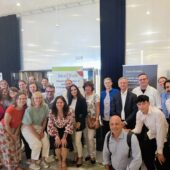
The first event of the year has already taken place and it couldn’t have been any other than the GAIA – Gender Alliance for Innovation in Agriculture launch event in
On 4th and 5th December, Data4Food2030 participated at the FOOD2030 Conference, organised by the European Commission, in its premises, in Brussels, Belgium. Let’s have an overview of our fruitful participation
Why look at global societal and technological trends for the data economy? First of all, the trends often have a significant impact on the data economy and, implicitly, on the
The Sitra rulebook was developed by a diverse group of experts from Sitra, Industry, academia, and public service to provide networks of companies and organisations with the necessary tools for
Exciting news: Our project’s vision is coming to life through a stunning, eye-catching animated video! Are you ready to embark on a journey through the world of data economy, food
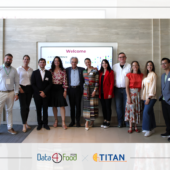
Following the successful representation of the Data4Food2030 in the exciting Synergy Days Conference, our 24 partners from 12 European countries have converged in the beautiful city of Thessaloniki on October
Did you know that peach was the first fruit eaten on the moon? All Synergy Days Conference participants dropped by the Data4Food2030 interactive booth had the opportunity to learn this
What is the Data Economy for Food Systems (DE4FS)? This is the fundamental question that needs to be answered in order to develop a common language and make a fair and
The past few months have been quite busy for the Data4Food2030 partners, who have been all over Europe networking, presenting the project and sparking discussion around data sharing and digital
The Data4Food2030 webinar on the Conceptual Framework for the Data Economy for Food Systems was conducted successfully in May 2023. The main goal of the webinar was to outline and